
The initial situation
The company L&J Recycling from Kamp-Lintfort required a new vehicle scale for its recycling business. The company processes mineral materials such as construction waste, concrete, and road rubble, and processes them into recycled building materials.
For such an operation, reliable weighing is an essential part of daily processes. Material inflows and outflows must be accurately recorded, documented, and billed. At the same time, the environment places special demands on vehicle scales. Dirt, water, mud, and heavy loads are often part of everyday work in the waste management and recycling industry. Therefore, when planning a new vehicle scale, it is important to consider the local conditions.
Why vehicle scales are indispensable in waste management and recycling
In waste management and recycling facilities, truck scales serve, among other things, to ensure compliance with legal requirements, fair weight and billing determination, and the documentation of material flows.
Typical locations of use can include recycling centers, incineration plants, landfills, or recycling companies.
More information on scales in the waste management and recycling industry
In-ground or surface-mounted: Which design is suitable?
In principle, the installation of both in-ground and surface-mounted scales is possible, as well as concrete and steel versions. Both designs have different advantages and must be planned according to the respective location and adapted to the local conditions.
In-ground scales are installed flush with the ground. As a result, no additional ramps are required, and maneuvering is made easier. These scales are particularly suitable where space is limited and allow for integration into existing traffic areas. However, when using in-ground scales, it should be noted that this design can be more susceptible to water and dirt accumulation in the scale pit in the event of insufficient or irregular cleaning, clogged drainage pipes, or heavy rainfall.
For this reason, surface-mounted scales can be useful, as they are less at risk due to their design. They are installed above ground level and accessed via ramps. They offer good accessibility and can facilitate service or cleaning work. At the same time, however, this design requires more space: due to ramps in front of and behind the scale, the scale system itself can extend to around 24 meters, depending on the length of the scale. Since trucks must drive onto the scale as straight as possible and leave it just as straight, a significantly larger maneuvering and setup area is required overall.
The challenge on-site
For this project, the space required for a classic surface-mounted scale would have been around 54 meters. On the existing company premises, this design was not feasible due to the limited space available. A classic surface-mounted scale was therefore out of the question.
Instead, an in-ground variant was considered that was intended to combine several requirements: space-saving integration into the existing terrain, improved protection against dirt and water accumulation, and better accessibility within the scale pit.
The solution for our customer
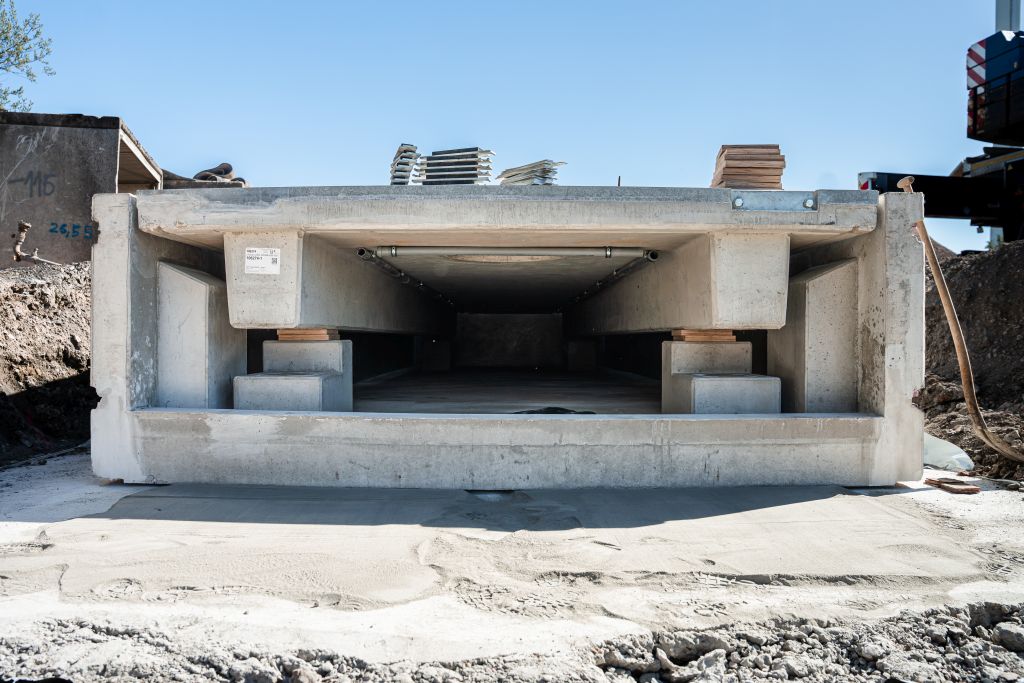
The solution consisted of planning an in-ground scale with a deeper scale pit and raised concrete foundations. This allowed the advantages of different designs to be combined.
The system uses the compact and stable design of a shallow scale, but offers the advantages of a deeper scale pit with more working height inside the pit. At the same time, raised concrete foundations ensure that load cells and electronic components are better protected from direct contact with water, mud, and dirt.
This results in a customized solution that can be integrated into the existing terrain to save space and is simultaneously designed for the special conditions of a recycling operation.
The technical difference: the combination of shallow scale and deep scale
In the case of in-ground truck scales, a distinction is made between shallow and deeper designs. Shallow scales often have a two-part bridge and, depending on the version, are equipped with more load cells. In our view, they offer high reliability and good concrete durability. However, the disadvantage lies in the lower working height within the scale pit.
Deeper vehicle scales, on the other hand, offer more space and thus facilitate cleaning and service work. These scales are usually equipped with only four load cells. With prolonged use, this can lead to deflection of the vehicle scale bridge. Under certain circumstances, this can also affect stability and measurement accuracy.
Raised concrete foundations to protect the load cells
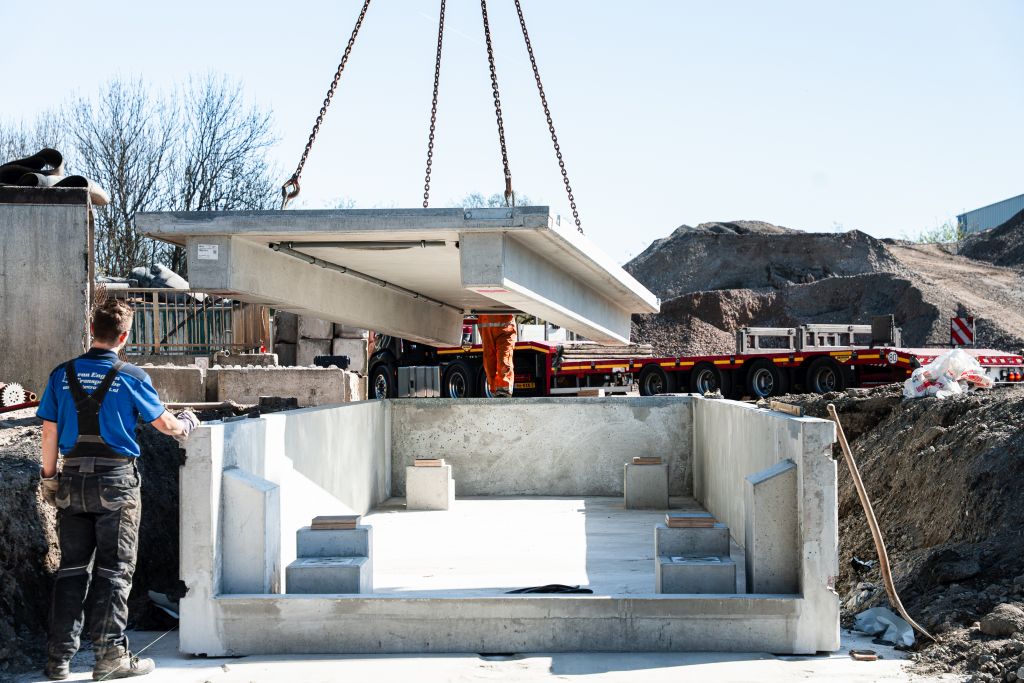
Another special feature of this system is the raised concrete foundations in the scale pit. They mark the areas where the load cells will be installed later. During final assembly, each load cell is placed on a concrete foundation. Depending on the design, four or eight load cells are used. Accordingly, this number of concrete foundations is also planned.
During service, maintenance, and repair work, it is often seen that some vehicle scales are equipped with very low or no concrete foundations at all. This increases the risk that electronic components come into direct contact with moisture, even with small amounts of water or mud, or even stand in water for long periods. This can impair the longevity and reliability of the scale.
Raised concrete foundations prevent this problem by elevating the load cells, thereby reducing the risk of corrosion, weather-related damage, and possible measurement errors.
Wherever moisture or heavy contamination is to be expected, such as in the waste management and recycling industry, raised concrete foundations are therefore particularly useful. They do not replace regular cleaning, but can contribute to the longevity of the scale as an additional preventive measure.
When planning a truck scale, good drainage of the scale pit should therefore always be considered. Especially during heavy rain, clogged pipes, or high dirt loads, water can collect unnoticed in the pit. Regular cleaning of the scale, and in particular the scale pit, therefore remains indispensable.
The advantages of the combined vehicle scale at a glance:
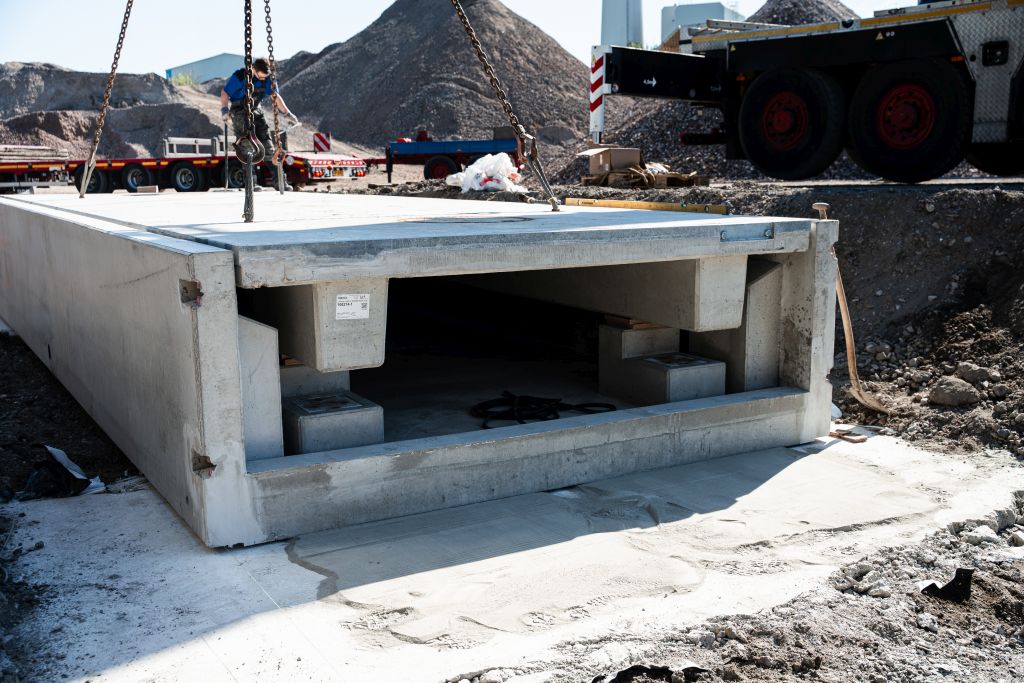
By combining a shallow scale and a deep vehicle scale, the advantages of both designs are brought together:
- Space-saving integration into the existing company premises
- No long ramps required as with a classic surface-mounted scale
- Better working height within the scale pit
- Better accessibility for service, maintenance, and cleaning work
- Raised concrete foundations for better protection of the load cells
- Direct contact with water, mud, and dirt is significantly reduced
- Stable and compact design of the scale bridge, resulting in less risk of deflection
- Positive effects on the reliability and service life of the system
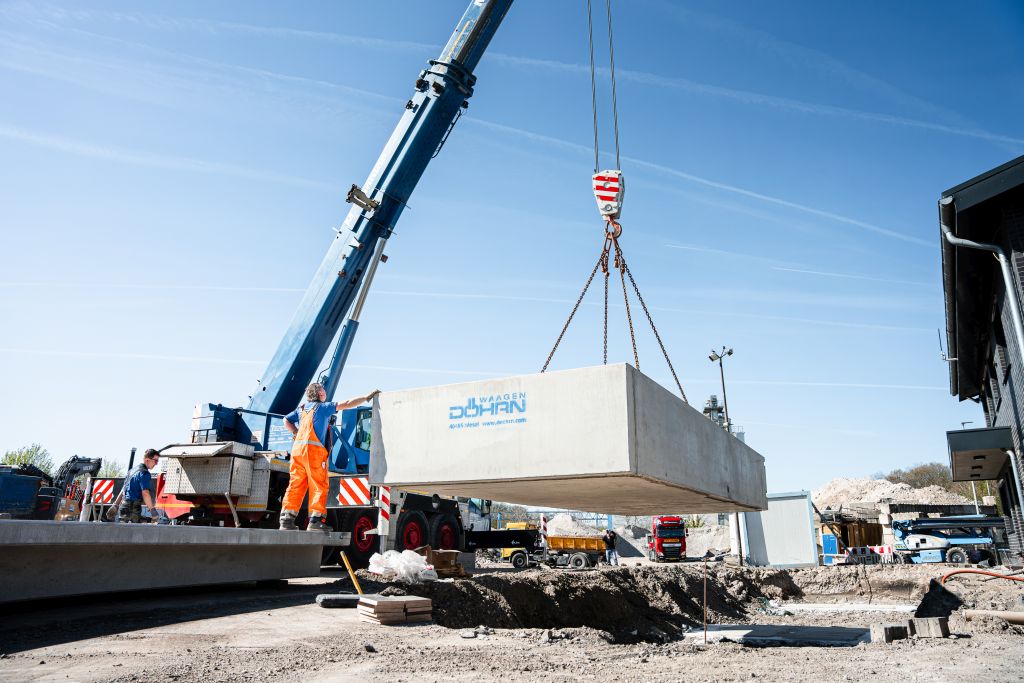
- During the assembly of the concrete parts, a smaller mobile crane can be used due to the divided pit and bridge elements, thus saving costs
Conclusion
The combination of a shallow scale and a deep scale represents an interesting solution for companies in the waste management and recycling industry. It combines the space-saving design of an in-ground scale with improved accessibility to the scale pit and increased protection of the load cells from water, mud, and dirt.
Especially in cases of limited space, this design can be an alternative to classic surface-mounted scales and contribute to higher operational reliability and a longer service life for the scale.

