
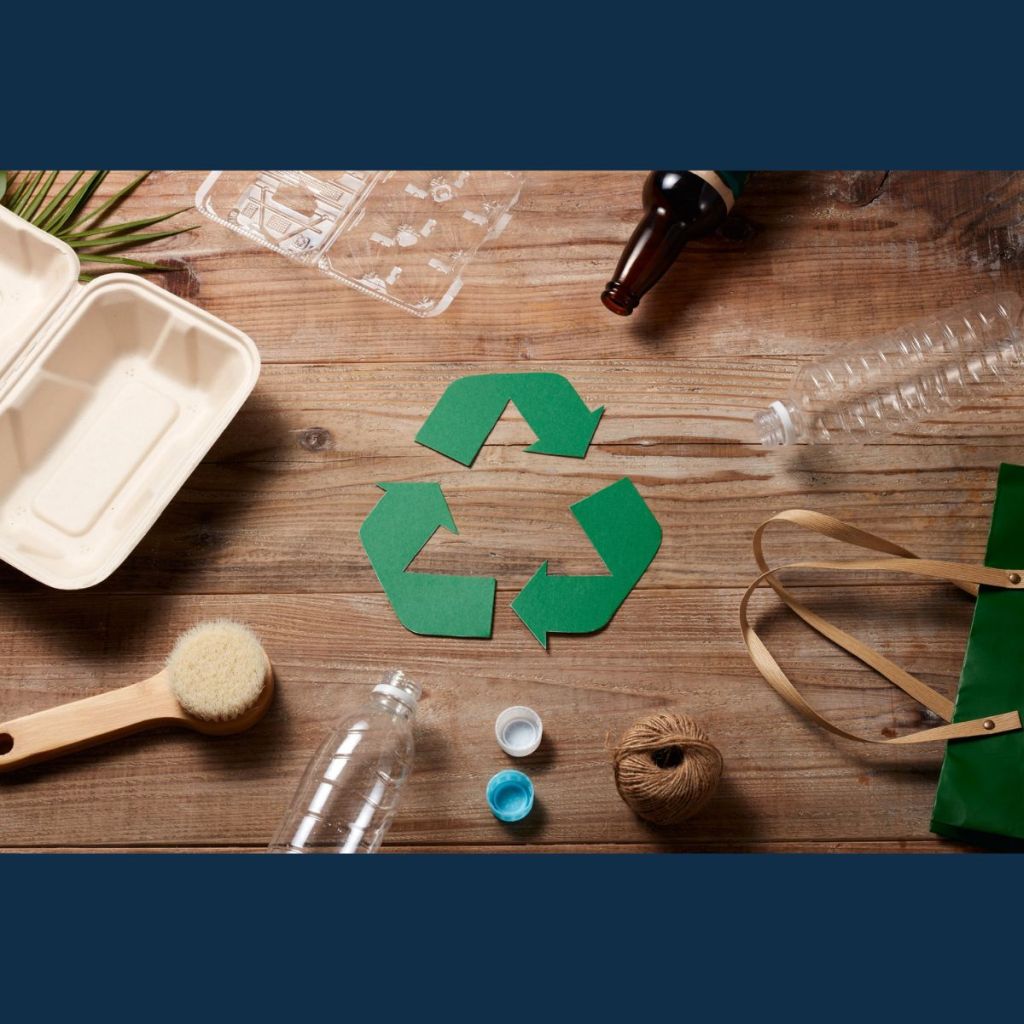
The waste disposal and recycling industry plays a central role in our society. Whether private or commercial: wherever products are manufactured and consumed, waste is generated. Some of this waste can be recycled and returned to the cycle, while non-recyclable waste must be disposed of properly. The goal is to keep the amount of non-recyclable waste as low as possible to conserve resources and protect the environment and climate. In this context, scales, especially in this industry, make a crucial contribution.
Not All Waste Is Created Equal
Whether food, clothing, building materials, chemicals, or furniture – the types of waste are diverse. Therefore, separate waste treatment is an efficient solution to enable as much reuse as possible. Did you know that the topic of waste separation in Germany only originated in the late 1970s? At that time, huge landfills with tons of unsorted waste burdened nature and the climate. To reduce pollutants and boost recycling, the separation of old glass and paper was first introduced, followed by the yellow bag, and later the residual and organic waste bins. Since then, waste separation has been continuously optimized to recycle as much as possible.
The Journey of Waste – From Bin to Recycling
Step 1: Collection
Separated waste is collected by refuse vehicles.
Step 2: Transport
Refuse vehicles transport the waste to the corresponding disposal and recycling facilities.
Step 3: Sorting
In these facilities, waste products are sorted into categories. Often, a rough cleaning also takes place here.
Step 4: Recovery
Depending on the waste product, there are two paths here:
Recycling
Recyclable materials such as paper and plastic are cleaned, melted down, shredded, pressed, or otherwise processed to produce new products, e.g., granulates.
Disposal
The waste is incinerated, from which energy can be recovered.
Special waste such as batteries or hazardous substances are treated separately under safety conditions.
Step 5: Landfill
Non-recyclable waste, such as ash and construction debris, is stored, compacted, and covered here to minimize environmental impact.


Proper Waste Management = Environmental and Climate Protection
Sustainability and climate protection are more important today than ever. Due to growing consumption and increasing waste volumes, it is therefore particularly important to continue optimizing the waste disposal and recycling industry to conserve resources, strengthen the circular economy, and relieve the environment.
We can make a small contribution ourselves by producing less waste and separating our waste correctly.
Scales as an Efficient Tool
Various scales are regularly used in the waste disposal and recycling industry. This is because waste also needs to be weighed. What may seem insignificant at first glance is actually of high relevance. The most important points here are:
Compliance with Legal Requirements
In Germany, waste must be classified according to the Waste Catalogue Ordinance (AVV) to ensure proper disposal. For hazardous waste, an electronic verification procedure (eANV) is additionally mandatory.
Determination of Fair Billing
At the recycling center, for example, vehicles are weighed before and after unloading using a vehicle scale. The difference can be used to determine the actual amount of waste, allowing for accurate billing.
Control, Documentation, and Traceability of Weight Data
With every weight recording, data is digitally stored, providing the opportunity to trace waste quantities from specific suppliers.
Similarly, statistics can be created, for example, on how much paper waste was produced in a certain period.
Optimization of the Circular Economy
By accurately recording waste quantities, it becomes clear which types of waste occur in what amounts. This allows materials to be specifically returned to the cycle. Recycling conserves resources and thus strengthens the circular economy.


Commonly Used Scales in the Waste Disposal and Recycling Industry
Vehicle Scales
The weight is determined before and after loading or unloading, e.g., of a refuse vehicle. Vehicle scales are found in biogas plants, recycling centers, and waste incineration plants.
Floor Scales
For smaller quantities of waste, floor scales are often used, where the waste is weighed, for example, in pressed form, on pallets, or in containers. The areas of application are also diverse here. They are also used, for example, for weighing hazardous substances (eANV).
Crane Scales
Especially when loading heavy or bulky items such as scrap metal, weight and quantity can be recorded using these scales. They are used, among other places, at recycling centers or disposal facilities.
Belt Scales
These scales are used, for example, in sorting plants to record material flows. The waste quantities are recorded in continuous operation. Belt scales are also frequently found in ship loading operations.
Container Scales
Container scales are specially designed for weighing individual containers. These can be adapted in size and for a wide variety of container dimensions. They are used, for example, by container services or recycling centers.
Conclusion
In the waste disposal and recycling industry, scales make a crucial contribution by precisely recording weight data, enabling fair billing, creating transparency, and helping to manage processes efficiently. They also make an indirect contribution to environmental and climate protection, as their use can promote the strengthening of the circular economy, resource conservation, and the recycling of materials.

