
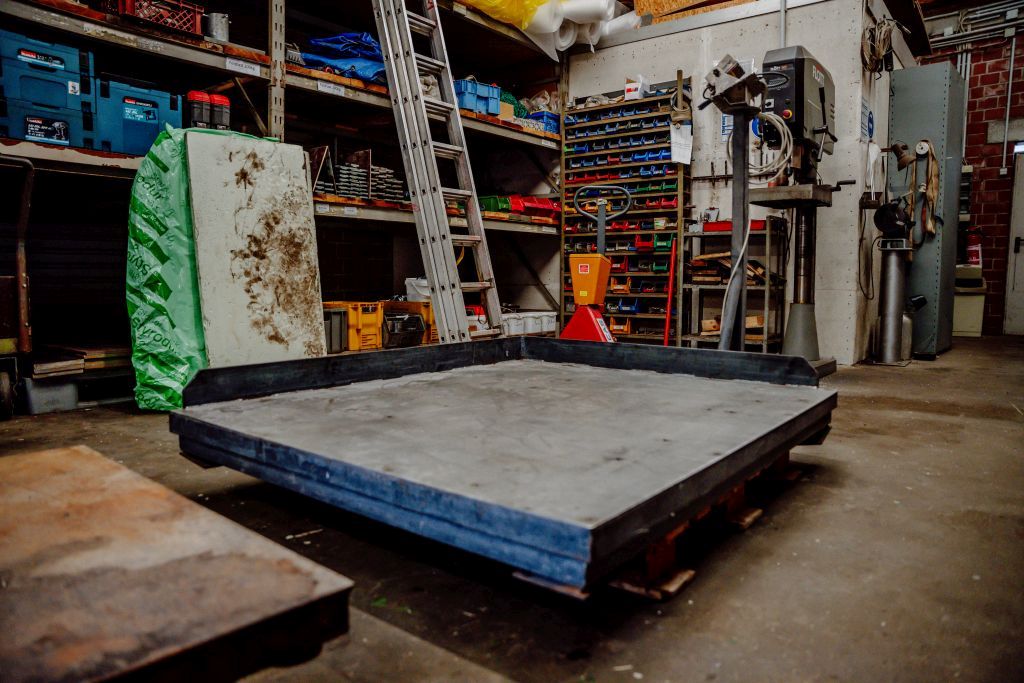
Platform scales are true all-rounders among weighing systems. They have become indispensable in industry, production, and logistics. They are used wherever heavy or bulky goods need to be weighed. Whether for filling processes, weight determination, or quality control, their versatile applicability ensures precise measurement results and more efficient workflows in many industries.
What are platform scales?
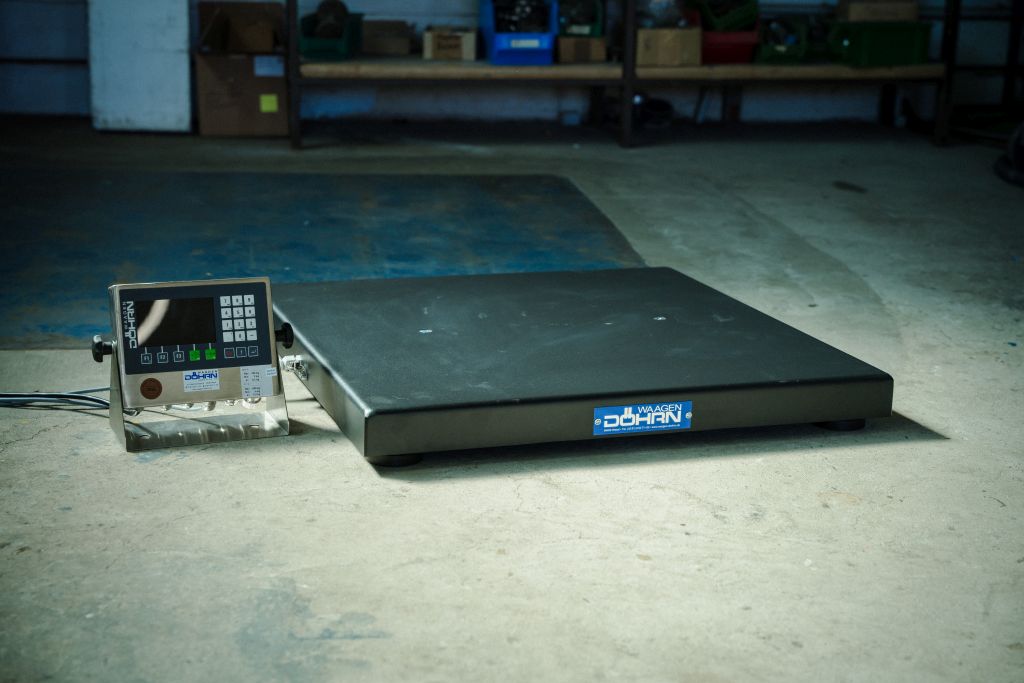
Platform scales are robust, usually rectangular platforms specifically designed for weighing large and heavy loads. Depending on the model, the weighing range is between several hundred kilograms and several tons.
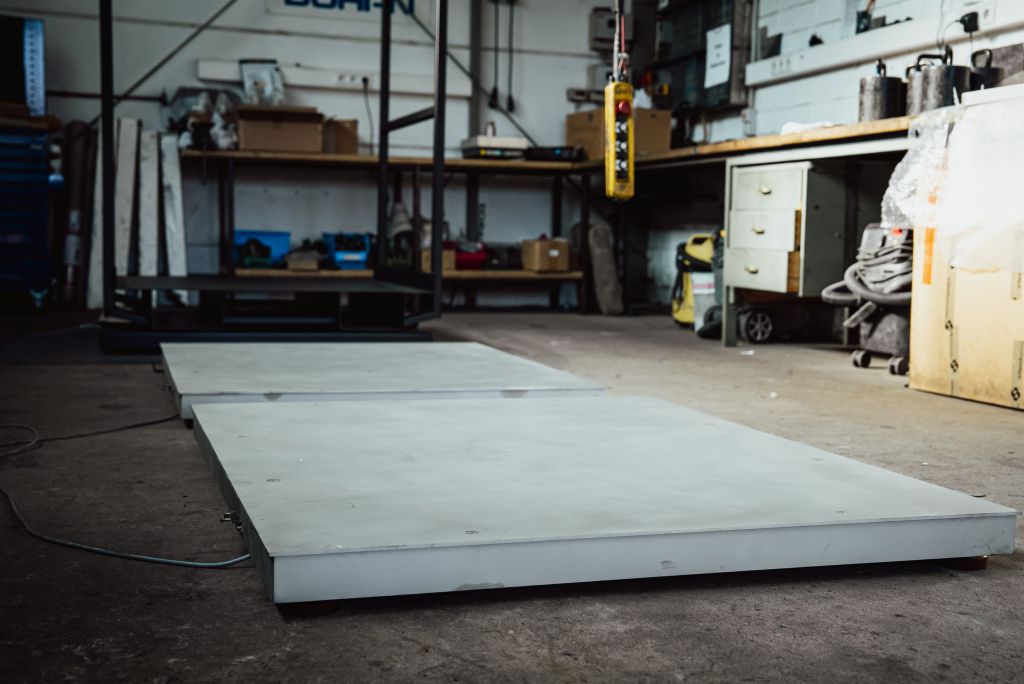
As the name suggests, the weighing platform of platform scales is usually located directly on the floor or is flush-mounted into it. This allows pallets, containers, or other bulky goods to be easily placed on or driven onto the scale with a forklift.
A platform scale is standardly equipped with four load cells, which are installed in the corners of the platform. These precisely record the weight, convert it into electrical signals, and transmit them to the weighing terminal, which digitally displays the weight value.

Function & Relevance
Platform scales are indispensable in many processes, as they enable reliable weight checks of goods, materials, batches, or intermediate products.
Precise measurement results are essential for complying with legal requirements, ensuring quality, and for accurate billing and documentation.
These scales also play a crucial role in terms of safety: to avoid risks for personnel, machinery, or transport equipment, platform scales help to identify overloads or underloads early during filling or dosing processes.
Thus, platform scales permanently ensure precise, safe, and optimal processes. For this reason, they are an indispensable tool in daily work for many areas.
Advantages
High Load Capacity
Depending on the design, platform scales can weigh loads from several hundred to several thousand kilograms. Specially developed heavy-duty platform scales can even handle weights up to 10 tons.
Easy Handling & Cleaning
The flat design facilitates the placement and movement of heavy pallets or containers, for example, and at the same time allows for easy cleaning. Stainless steel platform scales are also less susceptible to dust, dirt, and water.
Durability
Thanks to their robust construction and weighing technology, platform scales can deliver precise measurement results for decades. For environments with high hygiene requirements, models made of stainless steel and with a high protection class offer additional protection against rust and corrosion.
Individual Customization Options
Whether calibrated or uncalibrated, painted or made of stainless steel – platform scales can be configured in various weighing ranges, materials, or sizes and adapted to specific environments. Depending on the application, additional ramps or installation frames can be mounted, for example.

Areas of Application
Production
In production or processing, raw materials, intermediate, or finished products are weighed on production lines using platform scales, and measurement values are controlled to comply with specified weight requirements and ensure quality.
Recycling and Waste Management
In waste disposal and recycling facilities, waste, metals, or residues are weighed to create invoices and document material flows.
This allows waste quantities to be analyzed and recycling processes to be specifically optimized.
Food Industry
Especially in the food industry, particularly high hygiene standards apply. For this reason, platform scales with a very high protection class and smooth, resistant material, e.g., stainless steel, are used here to protect the scale and weighing electronics during cleaning processes, e.g., with high-pressure cleaners.
Chemical and Pharmaceutical Industry
In laboratories, production facilities, or filling plants, particularly precise and resistant platform scales are required. They must withstand chemicals, moisture, and cleaning agents while providing precise measurement results for processes requiring documentation. ATEX models are often used in potentially explosive areas.
Agriculture
Weighing feed, crop yields, or even animals is made easy with platform scales. Determining precise weight values is essential here, as the weight of animals provides information about their health, or the quality of crop yields can be assessed based on weight. Prices can also be determined by weight here.
Warehousing and logistics
Here, platform scales assist, for example, in freight forwarders or mail-order companies with the weighing of pallets, boxes, or containers during goods receipt or dispatch. This allows weight specifications to be checked for correctness, which in turn ensures proper documentation of inventories and material flows.
Conclusion
Platform scales are precise, robust, and versatile measuring systems that play a central role in almost all industrial sectors. They enable reliable weight control, support compliance with quality standards, and contribute to safe and traceable processes. Due to their adaptable design and long service life, they are a central instrument of modern weighing technology – from production to disposal.

